


Mountain Biking on Velebit Has a Lot to Offer
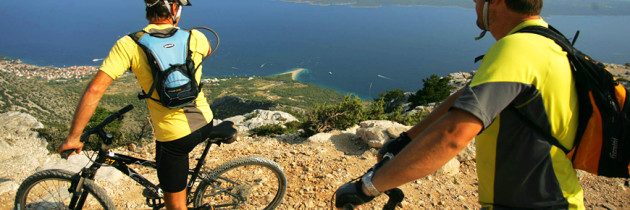
Mountains have haunted folk imagination from the earliest times. Their remoteness, sheer scale and craggy silhouette etched against the sky invite feelings of reverence. The inhuman magnitude prompts us to consider ourselves from a different point of view. This shift in perspective leads to mystic qualities being ascribed to mountains and peaks. Some of the most famous examples like Mount Olympus or Fuji were even regarded as the home of deities. The mythologies built around them have survived into the present and have made these places global cultural touchstones and destinations of a kind of secular pilgrimage.
Velebit is no different in that sense. It has many local legends associated with it. Its deep gorges and rugged slopes are portrayed as the abode of spirits in tales and poems. Stretching along the coast from the Vratnik mountain saddle to the canyon of the Zrmanja river in the south in an imposing way, Velebit acted as a bulwark against an exploration of the interior of Croatia. Owing to the splendor of its natural environment and the large role it played in the pastoral and nomadic life of the region, the storied mountain has become one of the most potent symbols of modern Croatia, which captures some of the qualities of its people.
Don’t Be Menaced By Routine While Mountain Biking on Velebit
Possibly the best way to appreciate the expansive mountain scenery is from atop a mountainbike. Even as you are speeding downhill, the secluded valleys, small mountain villages and the stooping trees are hard to miss. The distant panoramas of neighboring peaks and the Velebit Channel islands tend to crawl along no matter how fast you peddal. The feeling you get while gliding on your hardtail and spraying scree on all sides on a Velebit afternoon has no substitute. The cycling fashion trends are a downside, but everyone who is there to see you will be similarly attired and in no position to judge.
For two years running, Velebit has hosted an annual mountain bike marathon. The event took a slew of mountain bikers across a long stretch of recently plotted cycling paths. Similar events feature three categories of difficulty – ultra, challenger and recreational based on a gradation of the slope. Using the lovely town of Starigrad as a starting point, the route of the marathon took the participants all the way to the Zrmanja river via Libinje, Bukve, Tulove grede and Mali Alan. The endurance athletes braving the 80 km trek often single out the mountain biking Velebit stage as their favorite stomping ground.
As the track starts to climb, the view expands and the scenery gets better and better. Despite some patches of forest along the track, the view is unobstructed and the route weaves around tunnels and narrow ravines. Regular supply stops make carrying loads of baggage unnecessary. By the time you hit the technical part of the route, with upward and downward slopes, the large cluster of bikes disperses and you are alone with the mountain. The cinematic terrain tempts you to whip out the cameras or the easel. The piece of equipment that bears the greatest load is still the mountain bike. Some downhill sections of the marathons are strenuous, lined with rough stones, and put great strain on the suspension and consequently, the rider.
Mountain Biking Routes on Velebit
To kick us off on a short tour of the cycling routes of Velebit, an easy one. The bike path from Starigrad to Reljani is a short course great for people who wish to get acquainted with the local history. It is a short trip through charming villages and millenia of rustic culture. Information panels will fill you in on the most interesting local customs and lead to the Paklenica National Park reception area to round off an educational experience. Should you veer towards the coast, you can reach some lovely natural beaches, as well as the forlorn Večka tower and a tenth century church dedicated to Saint Peter.
The Veliki Kamenjar route starts at a crossroads in Maslenica. A gravel road takes cyclists through a quarry. All the while there are mountaintops in view and low foliage fluttering in the gasps of wind. Coming up to the village of Zelenikovac herds of sheep graze on the gentle slopes in the summer months. As you leave the walls of unmortared stone behind you a few kilometers later, you follow the highway until you reach an underpass. The main road leads to the observation point of Pariževačka glavica. It is a tranquil spot with a great view of the canyon the river Zrmanja has burrowed in the landscape. The quaint villages of Čarlići and Jasenice offer some lovely photo-ops and a chance to admire some examples of medieval sacral architecture and artisanship. As the road loops back to Maslenica, there are some idyllic olive groves along the way whose cultivation stretches back for centuries.
The last route we are looking at in this piece runs from Golubić to Muškovci and is a testament to the ingenious ways of nature. The fairly long asphalt route of 28 kilometers writhes across broken terrain alongside the Zrmanja river. The area is criss-crossed with canyons, springs, bridges and waterfalls. Zrmanja’s tributaries such as Krupa feed a natural garden, and the river’s liveliest portion delights swimmers with its purity. Taken together, these havens for those of us in search of some distance from stress and labor represent a soupçon of the finest mountain biking Velebit has to offer.
Paklenica Hiking – Walking Your Troubles Off

Some people are made for greatness, some are made to be soldiers, some lawyers or politicians, even car salesmen or saleswomen, but each and every one of us is quite literally made for walking. Ever since our ancestors stood upright, a long sequence of adaptations has made man dependant on his ability to travel long distances at a modest pace while keeping his hands free. This ambulatory nature is reflected in two facts about walking. Number one, walking is enjoyable. When there is no rush, time pressure or a burden to carry virtually everyone loves walking. In good company a good distance can be travelled while we only perceive a small amount of time has passed. Secondly, walking is not very tiresome. A person of average fitness can walk for hours without experiencing major strain and that is fairly unique for any physical activity. The energy expenditure does not increase linearly as our walking or running speed increases, even if at about 8 km/h running becomes more economical than walking.
In order to reap the health benefits of walking, you need to engage in its more strenuous form. Once the extended walks start taking upwards of two hours and your heart rate starts to pick up, we are entering hiking territory. Hiking retains the enjoyment that walking holds while adding a sporting aspect and acting as a low intensity workout. When done in a meditative natural setting it also stimulates thinking and reflection. This virtuous trifecta is why Paklenica hiking is one of the most pleasurable ways to spend your time.
Out on the Trail in Paklenica national park
A remarkable feature of Paklenica hiking trails is the wealth of paths available for travel. You can tailor the route according to time constraints. If you can only spare a couple of hours because you have other activities planned or have to adhere to a bus schedule, that isn’t a problem. If you set aside all day for hiking, you can effortlessly structure a loop that takes six or seven hours to complete using the widely available Paklenica National Park maps or GPS. The trails range from gravel roads where you can walk comfortably and take it easy to demanding footpaths hugging the rock.
The trails have markers – arrows and white dots within red circles – although in the case of a handful that see little traffic they might be harder to locate. Trails not charted on some Park maps require a little prep work in advance, otherwise a couple of hours could be lost getting back on track. That is a small price to pay for a glimpse of the divine nature in the Park’s canyons and pine forests. The same can be said of the lack of standard tourist accomodation on Park grounds. Ivine Vodice, Vlaški grad, Struge and other renowned mountain lodges and shelters welcome tired travellers and hikers who want to spend the night, but can’t match the comfort of a hotel. This will make the return to your rented apartment in Starigrad all the sweeter.

Experienced hikers enjoy the comradery as much as wild nature and majestic mountain slopes, so they will think to bring some friends along for company. Still, it is worth reminding anyone to keep a short checklist of items essential for a carefree hike. Hiking boots for comfort, weather-appropriate clothing, sunscreen, a waterproof coat, a flashlight, first aid kit and the Paklenica national park entry ticket. That’s a lot to remember! A map and compass can be left behind on shorter trips, along with sleeping bags. There are fresh water springs and streams scattered around the NP Paklenica: Kontinovo vrilo, Crno vrilo, Vratrovac springs; Velika Paklenica stream and some others. The water is of a high drinking quality. Still, bring along some bottled water for convenience.
The Thrills of Paklenica Hiking
The steeper trails waste no time in getting you to the lofty vantage points, with breathtaking views. The town of Starigrad and the Velebit channel stretch in the palm of your hand. Behind you the serrated mountain peaks and forests of beech and pine are bathed in morning mist. Some interesting landmarks await hikers, chief among them the cave of Manita peć and the tiny village of Tomići. A stroll down the village path bordered by walls of rough-hewn, unmortared stone is a haunting experience. An ascent from the mountaineers’ shelter of Vlaški grad leads to Sveto brdo – the second-tallest of Velebit’s peaks. Once you have stood level with the clouds at the very top, it is easy to comprehend the pious spark which prompted men to carve the Ten Commandments into a rock at the summit.
A long route favored by hiking enthusiasts starts off by going down the gullet of the Velika Paklenica canyon, to the Paklenica mountain hut. By way of the bowl-shaped Velika Močila valley hikers will reach the ominously named Crni Vrh – Black Peak – at an elevation of 1110 meters above sea level. From there the route slopes downwards through Jurline and forests of hornbeam in an arc. The starting point is reached in 6 hours following Naismith’s rule of equivalence between distance and climb (typically up to 8 hours in practice). Along the way parties are treated to abundant karst, panoramic views and close encounters with the local wildlife and plant species, of which around forty are endemic. The most frequented trail, however, leads to Borisov dom – the mountain hut synonymous with Paklenica hiking. The shorter duration and gentler incline render it a great starting point for getting to know Paklenica from Starigrad and the Park entrance.
A Bird’s Eye View of Paklenica Climbing
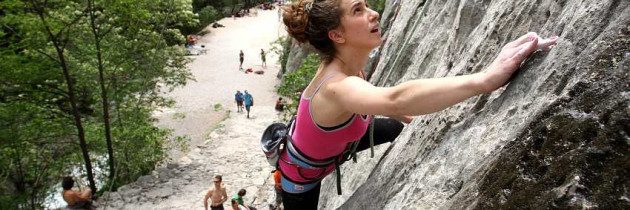
Thinking of taking your first vertical steps? Simply looking to add to an already impressive list of climbing conquests? In either case, you should definitely consider the Paklenica climbing possibilities. Calling it the Mecca of mountaineering would be an exagerration, but it is a modern climbing destination that has made its name known at home and abroad.
The sandstone crags holding up bolted climbing routes and the coastal location invite comparison with Spanish rock-climbing destinations near Malaga or Benidorm. These long-time favourites of seasoned climbers offer their best conditions for a climb between autumn and spring. The timetable in Paklenica is pretty much the reverse, so this type of climbing environment is available year-round. The licensing fees, prices of food, accommodation and fuel compare favourably with those in Spain as well.
We hope you will be able to use the information in this entry as handholds to help you reach a decision and visit Paklenica. Please keep reading and by the time the letters run out, you will know what to do.
Paklenica climbing is in season
The scenic canyons of Paklenica are accessed from the small town of Starigrad Paklenica, in the nook of the Velebit channel. To find it on the map, search for the town of Zadar on the Croatian coast. Zadar is a beautiful town with a rich heritage and less than 50 km away from Starigrad. The roads leading to the Paklenica national park are visibly and conveniently marked. They will take you all the way to the Park entrance. In fact, several climbing routes are within short walking distance of the parking lot itself.
March is a fantastic time to plan a rock climbing trip to Paklenica! The season stretches from April all the way to late October, but late April / early May is arguably peak season. This is the date of the annual Big Wall Speed Climbing Paklenica event, scheduled for May 1 – 4 in 2014. The climbing contest is part of a larger International climbers’ meeting that has been organized by hiking and climbing enthusiasts since 2000. With an ever increasing following, the event is starting to morph into a tradition.
Why Paklenica is the foremost climbing site in Croatia?
The first climbing route in Paklenica was completed in 1940 on the rock of Anića kuk. Decades ago climbing was more of a hobby than a sport in the region. Since then, domestic climbers have led the effort to map many more routes alonside their Slovenian colleagues (neighboring Slovenia is an Alpine state, hence it led the way in Yugoslavian winter and mountain sports). As a result Paklenica offers in excess of 360 improved routes, the majority of which are equipped with bolts.
The routes vary in several important ways, which results in the fact that all kinds of climbers – from novices to rock-climbing aces – can come up with a great itinerary for their stay in Paklenica. The routes belong to different grades of difficulty, however most are moderately challenging. The longest routes are some of the classic ones on Anića kuk, such as Mosoraški, Funkcija and Klin. While they measure up to 350 m, most other routes are shorter. They are also distributed among three climbing styles: single- and multi-pitched sports routes, and trad routes which require climbers to affix nuts and cams. Single-pitched sports routes are clustered in the vicinity of the Paklenica national park entrance.
Some Paklenica climbing Dos and Don’ts
We would like to end with some common sense climbing tips that are nonetheless worth repeating.
DO use protective gear – Something as basic as a helmet greatly increases a climber’s safety. Check your climbing gear for fractures, wear and other indications that it may be unsafe. When buying, look out for the certificate confirming that the product has been tested. Tired as we are of hearing it, safety is paramount.
DON’T climb alone – The Paklenica national park authorities have a good reason to insist on climbing as a group activity. Experienced climbers will tell you a climbing partner is essential. Hiring an instructor is likely a terrific option for beginners. Basic technique and maximizing your endurance are best taught out on the rock. Also, you want someone to witness your undertaking.
DO plan ahead – Browse our website to rent an apartment in Starigrad Paklenica in advance. Inquire about the characteristics of your climbing route. Make sure the grade of difficulty, length and quality of the on-site gear that await you conform to your expectations. It might be a good idea to purchase a local climbing guide. Recent editions are fairly exhaustive and will set you back about € 20. It is definitely a good idea for your party to have a review session to make sure you can handle your equipment properly. Every minute spent planning saves an hour down the line.
DON’T oversleep – if you are barely able to drag yourself out of bed for lunch, you probably do not count yourself among the top sports climbers on the continent. Still, since it gets quite hot in Dalmatia in the height of summer, it is advisable to make the most of the morning hours when Paklenica climbing. A pair of shades will keep you looking cool, but will likely not stop you from sweating. And if you ever feel the need to take a break from climbing (it happens), you can always take advantage of the sun at the Starigrad Paklenica beach and distract yourself with water sports.
Is It Spring Already? – Starigrad Paklenica Weather

The Starigrad Paklenica weather is typical of the Mediterranean climate with fair weather from springtime to fall, barring the occasional squall. Winters are milder than continental ones, with temperatures above zero. However, wind and inclement weather make life in winter harder for a seafaring population. But what is typical weather on the Croatian coast like?
Picture taking a stroll through a traditional Dalmatian village. You’re coming down a small rocky hill, your sandals gently smacking against the cobbles. You can even imagine some folk music playing in the background, or just the sound of a battalion of crickets. It’s late in the afternoon, but the air is still shimmering with heat in the distance. There is no one about, and even the local sheepdog is snoozing in the shade.
As you turn from the main street, the walkway shrinks to barely a couple of meters. You can see the houses are made of white stone, the courtyard walls are unmortared and inside you glance an old-fashioned well. You can tell the winch would creak as you wind it. The red-tiled roofs you were admiring from the hilltop are not steep. The few small windows are blocked by quaint pine shutters.
As you descend to the marina, you can’t help but notice that it lies in a secluded cove where the boats are protected, even if the high tide does not rise more than a couple of feet. You untie your dinghy and push out into the sea just in time to catch the sunset.
Traditional Dalmatian architecture revolves around the Mediterranean weather patterns. The narrow streets make for thick shade and shelter from the wind in winter. The thick walls provide insulation against extreme heat. The roofs don’t need a steep incline as snow is practically unknown, and the shutters rattle prettily in gusty weather. The Adriatic is a calm sea, but sudden gales may be too formidable for inexperienced navigators and small vessels.
Starigrad Paklenica retains some of the hallmarks of Dalmatian architecture, but enhances the experience for visitors with sprawling terraces and restful rows of pine and spruce trees. These help transform a living space into a zone of relaxation. There are also the recreational areas, hiking and cycling trails leading away from the village, and a long beach where crowding is not an issue.
Dalmatian pršut – courtesy of Starigrad Paklenica weather
The local Starigrad Paklenica weather is distinguished by its position at foot of the coastal Velebit mountain and the nearness of the sea. The sea smooths the transition between seasons acting as a huge reservoir of heat and tempering summer heat and winter frost. Velebit is a natural barrier to the weather patterns in the interior.
If you’ve ever searched for images of the Croatian coastline, you were probably overwhelmed with pictures of sunny beaches, sunlit panoramas, and villages basking in the sun. Now, this is hardly unusual for any summer destination, but it is also true to life. With an average of over 2500 hours of sunshine every year, Dalmatia is one of the most inviting places in Europe with regard to weather. The wide variety of outdoor activities available in the neighborhood of Starigrad Paklenica takes advantage of this fact. I mean, have you tried mountain biking in a downpour? I presume bird watching does not improve either. Still, even a rain of fire and brimstone could not deter partygoers from hitting their stride on Zrce beach.

Typical day in Dalmatia – courtesy of Mediterranean weather
From November to March the weather takes a turn for the worse as gales create traffic difficulties, bringing intense showers and sleet. The sea in the Velebit channel turns choppy and is hard to navigate in this part of the year. The northern Bora (bura) wind in particular lives on in folk infamy, and even a synonym for stormy weather (burno) is derived from it. Bura is a cold wind that significantly lowers air temperature. This is what makes it indispensable in the production of a local delicacy.
Pršut is a native Dalmatian cousin of Italian prosciutto. Having been cleaned and salted, high-grade ham is smoked for over two months before starting the drying process. Bura is instrumental in the initial phase, keeping the product cool and drying it consistently. This contributes to the recognizable taste of pršut produced in the Velebit region, where bura hits hardest.
When you visit Starigrad, you will undoubtedly be treated to pršut from a reputable local producer, courtesy of bura and Starigrad Paklenica weather.